I admit, I haven't been a huge user of Twitter. However, I've recently been bitten by the Twitter bug and I've started to explore the world of Twitter. If you care to follow me, then click here:
http://twitter.com/DrJosephKim

Wednesday, March 25, 2009


Iris Browser Update

The Torch Mobile Iris Browser has been updated again. It's a good mobile browser for my XV6800 Windows Mobile PDA/Smartphone, but I occasionally get an "out of memory" error if I visit busy web pages. Like many other mobile browsers, you can zoom in and out very easily and scan pages quickly. I've also been playing around with Opera Mobile, Opera Mini, Skyfire, and Pocket Internet Explorer. Proxy servers speed things up if they're configured properly.
Friday, March 20, 2009
When is Windows Mobile 6.5 Coming to Verizon?
We've all been hearing about the nice new features on Windows Mobile 6.5. Isn't it funny how Microsoft went from version 6, to 6.1, and now to 6.5? Will there be a 6.8 or 6.9 before version 7 gets released? Why such incremental changes?
For me, the biggest advantage of Windows Mobile 6.5 is the new Pocket Internet Explorer 6.5. I currently have a nice version of PIE because of the custom ROM loaded on my XV6800. However, it's not as nice as PIE 6.5 and I don't think my XV6800 could handle PIE 6.5 because the hardware just isn't robust enough for those requirements. It's a shame because these little devices have such incredible potential. They are considered mobile internet devices (MIDs) by many, but they don't really have the firepower as other dedicated MIDs.
For me, the biggest advantage of Windows Mobile 6.5 is the new Pocket Internet Explorer 6.5. I currently have a nice version of PIE because of the custom ROM loaded on my XV6800. However, it's not as nice as PIE 6.5 and I don't think my XV6800 could handle PIE 6.5 because the hardware just isn't robust enough for those requirements. It's a shame because these little devices have such incredible potential. They are considered mobile internet devices (MIDs) by many, but they don't really have the firepower as other dedicated MIDs.
Wednesday, March 18, 2009
Medical Students and BlackBerry
Medical students often need to get some type of PDA for their clinical clerkships. They may be required to enter patient information or log their procedures. Also, since they're often asked to write prescriptions (not sign them, just write them), they need to know how to look up drug dosing. Software like Epocrates can be very helpful when you're filling out 15 scripts on different medications. Gone are the days of flipping through a huge PDR to look up dosing.
So how does the BlackBerry fit into all of this? Traditionally, Palm had the greatest marketshare in the medical field. Recently, the Apple iPhone has become very popular among medical students, residents, fellows, and attendings. Yet you still find some medical students who are in their early years of training who are attracted to the BlackBerry. Why? Part of the reason could be that they may have come from a corporate background. Others may be serious "texters" and they may have gravitated to the BlackBerry because of the excellent keyboard and texting capabilities. For others, it's simply about cost. You can get a free BlackBerry from many carriers.
I've been wondering why RIM hasn't been more aggressive with their marketing towards medical professionals. They should partner with more software developers and have more available for their devices. Otherwise, they'll be left in the dust with the Apple iPhone and the Microsoft Windows Phone running off into the sunset.
So how does the BlackBerry fit into all of this? Traditionally, Palm had the greatest marketshare in the medical field. Recently, the Apple iPhone has become very popular among medical students, residents, fellows, and attendings. Yet you still find some medical students who are in their early years of training who are attracted to the BlackBerry. Why? Part of the reason could be that they may have come from a corporate background. Others may be serious "texters" and they may have gravitated to the BlackBerry because of the excellent keyboard and texting capabilities. For others, it's simply about cost. You can get a free BlackBerry from many carriers.
I've been wondering why RIM hasn't been more aggressive with their marketing towards medical professionals. They should partner with more software developers and have more available for their devices. Otherwise, they'll be left in the dust with the Apple iPhone and the Microsoft Windows Phone running off into the sunset.
Free Epocrates® Essentials for Medical Students – Download Days iPhone March 17-18, 2009
Free Epocrates® Essentials for Medical Students – Download Days iPhone March 17-18, 2009
If you're a US medical student, go here:
http://www.epocrates.com/downloaddays/
It's great to see Epocrates offering this 1-year license for free to medical students. Med students have enough student loans and books cost a fortune. So, anything that's free is generally warmly welcomed.
If you're a US medical student, go here:
http://www.epocrates.com/downloaddays/
It's great to see Epocrates offering this 1-year license for free to medical students. Med students have enough student loans and books cost a fortune. So, anything that's free is generally warmly welcomed.
Sunday, March 15, 2009
Mobile Phones and Public Health Implications
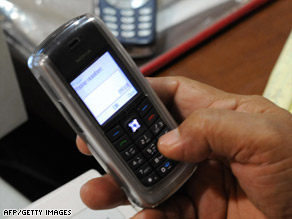
There's been a lot of controversy regarding the health effects of mobile phones. Recently, CNN reported about some of the potential public health implications of homes that only rely on mobile phones. My home is one of them. We don't have a landline phone. In fact, we haven't had a landline phone in years. I should sell my old landline phones on eBay.
Anyways, this article addresses the importance of epidemiological surveys conducted by the CDC and other organizations. These surveys are primarily conducted by phone, and only landline phone numbers get included in these studies. At 26 percent, Oklahoma has the highest percentage of homes that only have a mobile phone. Vermont has the lowest at only 5 percent. These are old statistics and most experts suspect that the numbers are considerably higher in 2009.
So if the CDC and other government agencies can't accurately track the health of the nation, where does that put us? Surveys will result in skewed data because of selection bias. The question remains, what type of people are more likely to live in a home that doesn't have a landline phone? My guess: just about anyone. Why? Because almost everyone now has a mobile phone. If you're young and single, why do you need a landline? What if you're a young married couple with no kids? Once again, no need for a landline. What if you're an active senior? You probably have a mobile phone since you're active and you're going out. Do you need a landline? What if you're a family with teenage kids? If they each have a mobile phone and both parents have phones, then who needs a landline?
I'm not making the argument that people should get rid of their landline phones. I think there are some serious public health implications at stake and perhaps the government needs to come up with a way to conduct surveys using more creative measures (like e-mail?).
Friday, March 13, 2009
Prevent Opera Mini from Freezing in Windows Mobile
I've been testing Opera Mini on my Windows Mobile device and I was pleased by the speed and performance, but I noticed that it would freeze up occasionally. My entire device would crash and I'd have to reset the phone. I decided to change the Network Protocol from Socket to HTTP. Now, I have yet to experience a freeze or a crash. Opera Mini 4.2 has become my favorite mobile browser on my XV6800 (HTC Titan, Sprint Mogul) Pocket PC because it's so much faster than Skyfire, Opera Mobile, Iris, or Pocket Internet Explorer. So, if you use your mobile device to browse medical websites and participate in CME activities, I would urge you to try Opera Mini. You won't get any "out of memory" messages and if you switch your Network Protocol, you shouldn't get any frustrating freeze-ups. Caveat: you won't get Flash content on Opera Mini.
Thursday, March 12, 2009
How the Apple iPod is Changing Healthcare

You've probably heard of the new Apple iPod shuffle. This thing is tiny! I think they should have named it the pico. Anyway, when I saw the announcement for this new iPod, I started thinking about the different ways that the iPod has changed healthcare.
First, doctors and other healthcare professionals are using iPods and other MP3 players to participate in audio continuing medical education (CME) activities. Most of these come in the form of podcasts, but some are straight MP3 audio or MP4 video files that you can load on your iPod. Clinicians are now listening to medical education while they exercise, while they drive, and when they travel on planes. iPods have made it so easy to carry volumes of audio medical education on a tiny little device.
There's another way that the iPod has changed healthcare. Patients now have access to audio (and video) health information. Doctors, nurses, and hospitals are releasing audio podcasts programs that are very popular among patients. They are learning more about their own conditions and this patient education is leading to better self-management. Self-management is critically important in for conditions like diabetes and heart failure.
Tuesday, March 10, 2009
Opera Mini on Windows Mobile
I've been using the Opera Mini browser on my Windows Mobile XV6800 (aka HTC Titan). It's a very fast browser that requires Java Virtual Machine (VM) on my device. Compared to browsers like Skyfire and Iris, it's much faster. However, it seems to be freezing up occasionally and causing my device to crash. Now, is that because the browser is unstable or because the operating system on my phone is unstable? (after all, I've loaded a custom ROM on my device, so it hasn't been fully tested)
Compared to Safari on the iPhone, Opera Mini is not nearly as easy to use. However, it may be the closest thing out there for Windows Mobile until Windows Mobile 6.5 or 7 are offically released. My hardware can't fully support these newer operating systems, so I'll probably be stuck with Windows Mobile 6.1.
Compared to Safari on the iPhone, Opera Mini is not nearly as easy to use. However, it may be the closest thing out there for Windows Mobile until Windows Mobile 6.5 or 7 are offically released. My hardware can't fully support these newer operating systems, so I'll probably be stuck with Windows Mobile 6.1.
Saturday, March 07, 2009
The Buzz About the Palm Pre
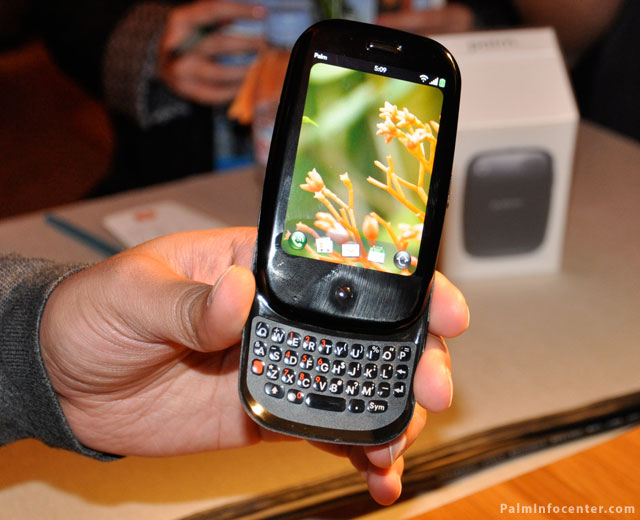
The Palm Pre has been receiving a ton of buzz, especially among the medical community where so many clinicians are loyal Palm OS users. What will the switch to Web OS look like for these individuals?
I admit that I've never been a fan of the Palm OS. The inability to multi-task was a real killer for me. I liked the simplicity of the OS, but it was too simple for my needs. Hence, I've been a loyal Windows Mobile user (starting with the iPaq and now with an XV6800). The Palm Pre looks like a very exciting device. I think it has a lot of potential and its popularity will help Palm survive through this recession.
10 Years Ago - The Palm V Was Great
Wow, I was just reminded that the Palm V was a really popular PDA 10 years ago. The Gadgeteer has a great review of this now-ancient PDA. I still have a Palm V in my office. It's a relic - a literal antique. Isn't it amazing how quickly technology changes? Wow, 10 years have gone by very quickly.
I should build a mini museum of all the different gadgets I've owned. It goes way back to the Sharp Wizard/ Zaurus, then the Apple Newton Messagepad series, then the Palm Pilot, and then you have grayscale Windows CE devices, then they changed the name to Pocket PC and the iPaq was the device to have, then smartphones emerged and became very popular so I got the Windows Mobile Treo 700wx, and now here I am with a Windows Mobile (Microsoft changed the name again) XV6800, an OQO model 02, and a Samsung Q1 Ultra UMPC.
I should build a mini museum of all the different gadgets I've owned. It goes way back to the Sharp Wizard/ Zaurus, then the Apple Newton Messagepad series, then the Palm Pilot, and then you have grayscale Windows CE devices, then they changed the name to Pocket PC and the iPaq was the device to have, then smartphones emerged and became very popular so I got the Windows Mobile Treo 700wx, and now here I am with a Windows Mobile (Microsoft changed the name again) XV6800, an OQO model 02, and a Samsung Q1 Ultra UMPC.
MobileBlogger for Windows Mobile
Do you blog when you're on the go? Many people are embracing microblogging these days. Twitter and other sites are becoming increasingly popular. Well, if you want to use your PDA/smartphone to blog when you're on the go, then try MobileBlogger. This application works on Windows Mobile devices (soon to be called the Windows Phone if you have a smartphone). I just can't type very fast on my mobile device (which is a Verizon XV 6800), so I prefer using my Samsung Q1 Ultra UMPC, my OQO model 02, or my Lenovo Thinkpad X200 Tablet. What about you? Do you blog on the go?
Medical Students and PDA SmartPhones
What percentage of 3rd and 4th year medical students have either a PDA or a mobile smartphone? I would guess that number is very high, especially since many schools now require it. They require students to carry a PDA (either running Palm OS or Windows Mobile) so they can record patient encounters, procedures, etc. Several years ago, the dominant operating system was the Palm OS. I'm not sure what the case is right now. Are medical schools developing software that is compatible for the new Palm OS (which will be running on the Palm Pre), RIM/BlackBerry, and Apple iPhone? I'd have to think that it makes more sense to make everything web-based. This way, you can have any device you want. Most hospitals have Wi-Fi, so as long as you can get connected, you can enter all your information. As the iPhone becomes more common among medical students, residents, and attending physicians, there is a growing need to develop medical software. Or, will everything become web-based? It's difficult to multi-task if all your applications are dependent on a web browser.
Friday, March 06, 2009
BlackBerry Storm and Medical Applications
It really is a shame. I've not seen many medical applications for the BlackBerry Storm. The iPhone has a growing number of medical applications that are currently available, but the paucity of apps for the BlackBerry Storm is truly sad. Having Epocrates just isn't enough. I suppose the folks at RIM weren't thinking about medical students and residents when they released the Storm.
The developers and marketers at Apple have the right idea - focus on education by creating the iTunes U (the U stands for University) and get students and professionals to use their iPhone or iPod touch to learn or to engage in continuing education. This is the right way to apply technology, innovation, and education to improve healthcare.
The developers and marketers at Apple have the right idea - focus on education by creating the iTunes U (the U stands for University) and get students and professionals to use their iPhone or iPod touch to learn or to engage in continuing education. This is the right way to apply technology, innovation, and education to improve healthcare.
Monday, March 02, 2009
iPhone Dominating the Mobile Web Space

According to this CNN Money/Fortunate blog, the iPhone has 67% of the mobile Internet marketplace. Windows Mobile has roughly 7%. This data was collected by a group called the Net Applications.
Could this be true? Yes. Most doctors who use smartphones aren't browsing many websites. They mainly use drug database software like Epocrates. However, many medical students and doctors have been switching from Palm or Windows Mobile to the iPhone and the Blackberry. The iPhone has such a nice mobile browser that more and more people are using this to browse the Internet. Hopefully Windows Mobile will catch up as they improve Pocket Internet Explorer.
Subscribe to:
Posts (Atom)