Showing posts with label WiFi. Show all posts

Sunday, February 17, 2013

Verizon MiFi and Jetpacks 4G LTE connect up to 10 devices

I have an older Verizon MiFi that connects only 5 devices. The Wi-Fi hotspot is capable of 4G LTE, but it's an older version (MiFi 4510L). It still works fine, so I'm not upgrading anytime soon.

The newer Verizon 4G LTE hotspots are capable of connecting up to 10 devices. So, if you're traveling with friends, family, or co-workers, you can get your tablets and laptops online through a single hotspot.

Here are 3 of their current models:
  • Verizon Jetpack™ 4G LTE Mobile Hotspot MiFi® 5510L
  • Verizon Jetpack™ 4G LTE Mobile Hotspot MiFi® 4620LE
  • Verizon Jetpack™ 4G LTE Mobile Hotspot 890L

Wednesday, July 27, 2011

Force your MiFi 4510L Mobile Hotspot into 3G (EVDO) or 4G (LTE) mode (WWAN Settings)

The other day, I wrote about how my Verizon MiFi 4510L Mobile Hotspot was stuck on 3G (EVDO) and was not switching to 4G (LTE). If you're experiencing similar issues, make sure to read this.

For those of you wanting to manually switch your Wi-Fi Mobile Hotspot from 3G to 4G (or vice versa), here's a simple tutorial that outlines the steps that will help you do that.

  • Connect to your MiFi
  • Log in to your MiFi by typing this URL into your browser: http://192.168.1.1/
  • Click on "Setup Wizard"
  • The default password is "admin" (unless you've changed it)
  • When it asks you to set up a new password, click "cancel"
  • Now you'll see that you have several new menu options at the top red horizontal navigation bar: Home, Wi-Fi, LAN, WWAN, Security, Advanced

Wednesday, May 18, 2011

Free Wi-Fi hotspot tethering on the HTC ThunderBolt 4G

Verizon Wireless has been gracious to extend the free Wi-Fi hotspot tethering on the HTC ThunderBolt 4G. So, you can continue to use your ThunderBolt as a MiFi for free until June 15. Perhaps Verizon is still trying to finalize how much it will cost to tether on their 4G LTE network.

Tuesday, May 10, 2011

New Integer Wireless Experience Center Empowers Enterprise Decision-Makers

Developed with Cisco, Corning Mobile Access and 10 other partners, the 10,000-square-foot facility provides a rare, hands-on opportunity to vet and custom-build in-building cellular and Wi-Fi solutions

Newport Beach, Calif. – May 10, 2011 – As the selection of wireless products, networks and services grows, so does the challenge of assembling a solution that meets each enterprise’s unique, frequently challenging in-building requirements. To help CIOs, IT managers and other decision-makers make smart choices, Integer Wireless today founded the Integer Wireless Experience Center, a 10,000-square-foot facility providing a rare, hands-on opportunity to test a wide variety of enterprise-grade wireless solutions from more than 100 vendors, application developers and service providers.

Over the past 16 years, Integer Wireless has led more than 1,000 in-building and campus-wide wireless projects for clients such as Apple, Coors Field, Denver Department of Health, Kaiser Permanente, Hoag Hospital, Hyatt, Intel, NASA and Walmart. The company specializes in designing, installing and optimizing vendor-, operator- and technology-agnostic wireless solutions for a variety of verticals, including health care, general enterprise, sports and entertainment venues, retail stores, government and hospitality.

Tuesday, April 19, 2011

Verizon MiFi 4510L 4G LTE Mobile Hotspot

The first 4G Mobile Hotspot on the Verizon network is the MiFi 4510L 4G LTE Mobile Hotspot.

4G is up to 10X Faster than 3G!

Features
  • 4G LTE Mobile Broadband and Mobile Broadband capable
  • LTE: Typical download speeds of 5–12 Mbps and upload speeds of 2–5 Mbps.
  • Connect up to 5 Wi–Fi® enabled devices at one time
  • MiFi 4510L does NOT support VZAccess® Manager
  • Chipset: MDM9600
  • 4G SIM Card compatible
  • Slim, Compact size
  • Integrated External Status Display
  • User–Friendly Web UI: No Software to install
  • High performance internal antenna
  • Multi–color service state LED
  • External Antenna Connector (External antenna sold separately)
  • VPN Capability
  • Auto–Connect
  • Global Data roaming is set to ON by default

Battery Times: Usage–Up to 5hrs.

Tuesday, February 08, 2011

Battery life when using my Droid X as a 3G Wi-Fi Mobile Hotspot

The Droid X and many other smartphones are capable of turning themselves into 3G Wi-Fi Mobile Hotspots that allow you to connect up to 5 mobile devices. When you enable this feature, you'll get a notice reminding you that this feature will drain your battery very quickly, so you should plug your phone to a power source.

A few weeks ago, I was using my Droid X every day as my personal hotspot. I was using an external battery pack, so I had the ability to recharge my battery during the middle of the day. If I didn't have that battery pack, my phone would have died by noon.

The 3G mobile hotspot on the Droid X is a great feature, but it would be nice to see a higher level of battery efficiency in these devices. The MiFi 2200 is rated to 4r hrs and the Fivespot Global Ready 3G hotspot lasts 5 hrs, so those devices aren't great either unless you're carrying a separate battery pack.

Monday, January 31, 2011

Speed differences: Verizon USB tethering vs. 3G Wi-Fi Mobile Hotspot

I have a Motorola Droid X and I've been using the 3G Wi-Fi mobile hotspot feature so that I can get online with my laptop and my iPad. In the past, I used to tether using the USB cable.

Well, I did a speed test because I was convinced that 3G Wi-Fi Mobile Hotspot was slower than USB tethering. Sure enough, with 3G Wi-Fi Mobile Hotspot, I was experiencing download speeds of 0.5 Mbps. With USB tethering, the speeds were almost 3x faster! 1.3 Mbps.

Are you experiencing similar results?

Thursday, January 27, 2011

A mixed experience using the Droid X as a 3G Mobile Wi-Fi hotspot

I've been using my Motorola Droid X as a mobile Wi-Fi hotspot. The extra $20/month service fee is worth it if you'll be traveling and if you need to connect up to 4 devices to the Verizon Wireless 3G network.

Overall, the 3G Mobile Wi-Fi hotspot feature works fairly well, as long as you have a strong signal to the Verizon network. I've been relatively happy. occasionally, I've found the service to stop, even when I have a strong signal, so I'm not entirely sure why that's been happening. I'll have to do a few more tests to determine how frequently that's happening.

Plus, I'm also finding that the connection speed may slow down. When I restart the 3G mobile hotspot feature, then the connection speed resets back to normal.

The 3G mobile hotspot feature will drain your battery relatively quickly, so be prepared with an extended battery or an external battery pack. I'm using a Tekkeon battery pack that can charge my Droid X or my Apple iPad, so I've got plenty of battery power.

Tuesday, June 29, 2010

3 Reasons Not to Use Your Smartphone as a Wi-Fi Hot Spot

You've probably heard that can use certain 3G (and now 4G) smartphones as a Wi-Fi hot spot. Is this a good feature or a bad one?

Here are 3 reasons why this is not a good idea:
  1. You have to pay an extra fee to use your smartphone as a Wi-Fi hot spot. You can tether (using a USB cable or Bluetooth) for less.
  2. You'll be draining the battery on your smartphone and your laptop at a faster rate if you're using Wi-Fi compared to a USB cable. If you tether using a USB cable, then you can keep your smartphone charged.
  3. Your friends will want to share your data connection, so that will only slow you down. We all like to share, don't we?
So, what do you think? Is it worth it to use your smartphone as a Wi-Fi hot spot? I think I'll stick to USB cable tethering.

Friday, May 21, 2010

Android 2.2 Froyo includes Adobe Flash 10.1 support

Good news for all you Android users: Android 2.2 (also know as Froyo) includes Adobe Flash 10.1 support. Just when Verizon HTC Droid Eris users got their upgrades to 2.1, Google announced that Android 2.2 will be coming soon. You'll get a faster web browser, tethering, the ability to install apps to your storage card, and more. Tethering won't be limited to USB cable tethering. You can convert your Wi-Fi enabled Android smartphone into a Wi-Fi hotspot.

Tuesday, May 04, 2010

Unlimited Skype-to-Skype calls on Verizon Wireless

Verizon Wireless is advertising "Unlimited Skype-to-Skype calls." Smartphones that are capable of Skype Mobile include a long list of smartphones running Google Android and BlackBerry. Sorry Windows Mobile and webOS users. Your devices aren't on the list right now. Let's hope that changes soon.

In the past, people relied on Wi-Fi connections to use Skype. Now, you can use your 3G connection (without doing any hacking or modifications to your phone). This is a great feature for medical students, international medical graduates who still have family members overseas, and for cost-conscious physicians who want to save on phone bills and international calls. 

To learn more, visit  http://phones.verizonwireless.com/skypemobile/

Sunday, February 14, 2010

Cell phone use on an airplane

Over the past few days, I spent time on several different airplanes trying to reach my final destination (Dallas, TX) for a wedding. Unfortunately, I never made it there, so we ended up flying all over the country to various small and large cities. Each time I flew, I had to set my smartphone to "airplane mode." Now that we have Wi-Fi on many airplanes, I wonder if (or when) we'll have the freedom and ability to use our smartphones while we're in flight. I suppose I could pay for the in-flight Wi-Fi services, but I'd rather tether with my smartphone.

Wednesday, January 13, 2010

Wired vs. wireless tethering (USB vs. Bluetooth)

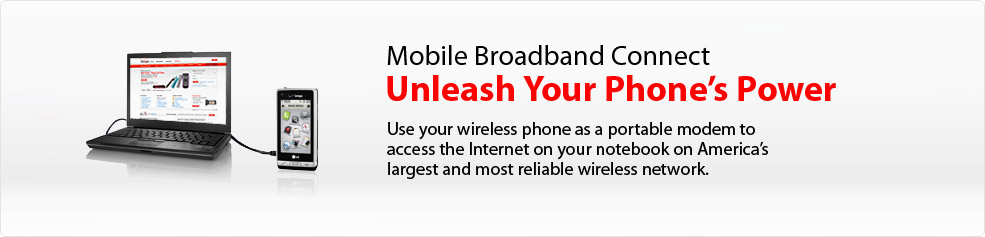
When you use your mobile phone or smartphone as a wireless modem for your laptop, this is called tethering. Some carriers have specific names for this (Verizon calls this Mobile Broadband Connect), but we'll just call it tethering.

So, if you don't have access to Wi-Fi, you can pull our your smartphone and get online with your laptop. You can do this either by connecting your smartphone to your laptop via a USB cable or by using Bluetooth wireless technology.

The benefits of using a USB cable include:
  • Generally a much faster connection
  • Generally a more stable connection
  • Preserve battery life in your smartphone
The benefits of using Bluetooth include:
  • No need to carry a USB cable
  • More mobility if you're moving around while tethered
When I tether, I almost always use a USB cable. I rarely use Bluetooth to tether because the connection speed is significantly faster when I use USB. Also, I can keep my phone charged while I'm using it as a modem. 

Here are some tips and suggestions if you tether:
  • Turn off your Wi-Fi to preserve battery life on your notebook
  • Always carry a spare USB cable since you never know when you'll need to tether
  • Don't have Bluetooth on your laptop? Get a tiny USB "dongle" so that you can have access to wireless tethering when you need it.
  • Check out PdaNet and TetherBerry.

Thursday, November 05, 2009

BlackBerry Curve 8530


The BlackBerry Curve 8530 will be appearing on Verizon Wireless and Sprint. The best part about this particular smartphone is its price: less than $100. Forget the little trackball. This new model has the optical trackpad. I wonder if that will reduce or increase the incidence of any repetitive motion injuries related to people cranking the trackball or repeatedly pressing buttons on a 4-way navigation D-pad.

The Curve 8530 will come with the BlackBerry operating system version 5.0 and will have your standard BlackBerry screen (not a touch-screen). T-Mobile has a very similar version: the BlackBerry Curve 8520.

I'm a big fan of touch-screen navigation, so you'll never see me carrying one of these. However, if you're looking for an inexpensive BlackBerry that also includes Wi-Fi and GPS, then the Curve 8530 is a nice option.

Tuesday, October 20, 2009

BlackBerry Storm 2 will launch tomorrow (Oct 21)


The rumors are true. The BlackBerry Storm 2 will launch tomorrow (Oct 21) on Verizon Wireless. Are you excited? The Storm 2 will have Wi-Fi capabilities, and it may also serve as a Wi-Fi router (similar to the MiFi).

Saturday, August 29, 2009

Weekend visit to the Sprint Store


Over the weekend, I had the chance to walk around the mall with my family. Naturally, I'm drawn to all the mobile phone stores and kiosks to see all the latest and greatest smartphones that are on the market. I spent a fair bit of time at the Sprint Store playing around with the Palm Pre. I know several people who have the Pre and they seem to really like it. I admit that the device has a very appealing design. It's simple, yet sophisticated. I really enjoyed playing around with webOS. It's a sleek OS that allows you to multi-task effectively.

I also had fun playing around with the MiFi. That's a tiny portable Wi-Fi hotspot that easily slips into your pocket. Of course, if you really want to set up a Wi-Fi hotspot, you don't need the MiFi. You simply need a customized smartphone that has built-in Wi-Fi (probably need a custom ROM on that smartphone).

Thursday, August 27, 2009

Using Skype on a smartphone


Have you tried using Skype on a smartphone? Using Skype, you can make free calls through the Internet. You can also pay $3/month to make unlimited calls to anyone in the U.S. or Canada (including mobile phone numbers). Although Skype software for mobile devices such as smartphones has been in beta mode for a while, they now have Skype for the following mobile devices:
By using Wi-Fi, you can use the Internet to make free calls. This way, you don't use up your airtime and you can use your Wi-Fi enabled smartphone for Skype. There's also something called Skype Lite, but that's mainly for other types of phones (including the G1 which is in beta).

To learn more about Skype for your mobile phone, visit: http://www.skype.com/mobile/

Sunday, August 02, 2009

Tethering on the beach


OK, I'm not actually on the beach. But I'm sitting in my hotel room which is right next to the beach and I'm tethering using my Verizon Wireless smartphone to get my laptop online. That's how I'm writing this short little blog post. While others are taking a nap, I'm doing some work and tethering to stay connected.

Although my laptop has a built-in WWAN card (AT&T), I don't use it enough to justify the added cost of paying for that service. Therefore, I simply use my smartphone to tether and that works just fine. I can tether using either Bluetooth, Wi-Fi, or USB. The main benefit of using USB is that you'll get a faster connection and you can charge the battery on your smartphone. Using Bluetooth or Wi-Fi to tether will drain the battery on your smartphone. Tethering is the most economic way to stay connected if you have a smartphone and a laptop/netbook/UMPC/tablet/etc.

Wednesday, July 22, 2009

BlackBerry Storm price drops as the Storm 2 approaches


You may have noticed that Verizon Wireless has been dropping the price on the BlackBerry Storm. Does this mean that the Storm 2 is imminent? I think so. I wonder what type of marketing campaign they will use to promote the Storm 2. Will consumers know how to tell the difference between the Storm and the Storm 2?
  • Wi-Fi
  • SurePress Screen (clickable screen)
  • Buttons
What other features are going to be different? Consumers will get really confused if Verizon continues selling the old Storm along with the new Storm 2 (which I'm sure they'll do until they deplete their stock). Will we see a GSM version of the Storm 2 appearing on other mobile carriers?

Tuesday, June 30, 2009

Is a Smartphone an MID?


MID = Mobile Internet Device. Some ultra-mobile PCs are inappropriately called an MID (even though a tiny PC is a mobile device that can get you on the Internet). As smartphone browsers become more powerful, smartphones are essentially turning into MIDs. Many smartphones now have built-in Wi-Fi. The days of the Nokia MID (such as the N810 and N850) may be numbered.
  • If smartphones can do everything an MID can do, then why purchase an MID?
Here's something else to consider. Smartphones that have a built-in GPS are starting to replace standalong GPS devices.
  • If a smartphone can do everything a standalone GPS navigation can do, then why purchase a standalone GPS navigation device?
The smartphone is starting to become many different devices. Will we see a convergence of all the different smartphone features out there? Will future smartphones all have very similar capabilities and specs?